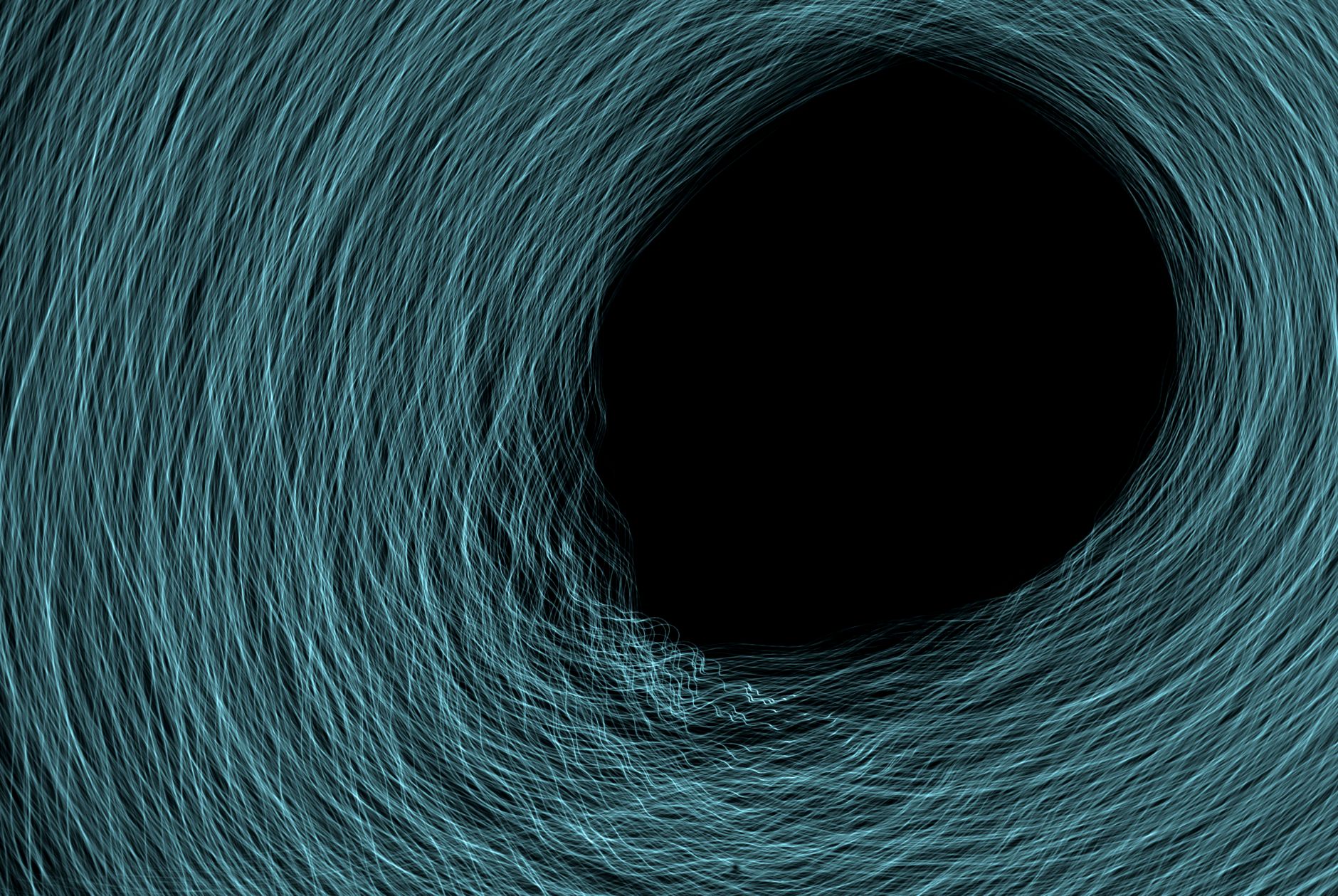
The black hole discovery has unveiled unexpected results in the early Universe. Scientists have identified ‘little red dots’ that challenge existing theories about cosmic formation.
What Are ‘Little Red Dots’?
In a groundbreaking study, scientists have identified what they refer to as ‘little red dots’ in the early Universe, which are believed to be indicative of black hole formation. These dots, observed in the cosmic microwave background, represent distant galaxies emitting light at specific wavelengths. Their existence has sparked significant interest in the astronomical community, particularly regarding the implications for our understanding of black holes.
Researchers utilized advanced telescopes to analyze the light from these little red dots, leading to the unexpected discovery of a black hole that defies previous theories of cosmic evolution. The findings suggest that this black hole, which formed shortly after the Big Bang, challenges the conventional timeline of black hole development. Here are some key aspects of this discovery:
- Unexpected Formation: The identified black hole existed much earlier than previously thought possible.
- Cosmic Implications: This discovery raises questions about the conditions required for black hole formation in the early Universe.
- Future Research: Ongoing studies aim to explore the characteristics and impacts of these little red dots on our understanding of cosmic history.
The black hole discovery not only sheds light on early cosmic events but also opens new avenues for research, prompting scientists to rethink existing models of the Universe’s evolution.
Implications of the Discovery
The recent black hole discovery has sparked significant debate among astronomers regarding its implications for our understanding of the early universe. This finding challenges existing theories about black hole formation and the conditions that prevailed shortly after the Big Bang.
Researchers are now questioning the processes that could lead to the existence of such a massive black hole at a time when the universe was still in its infancy. The implications of this discovery can be summarized as follows:
- Reevaluation of Formation Theories: The existence of this black hole suggests that current models of black hole formation may need to be revised. Scientists may need to consider alternative scenarios that could allow for the rapid growth of black holes in the early universe.
- Insights into Cosmic Evolution: Understanding how this black hole formed could provide valuable insights into the evolution of galaxies and the distribution of matter in the early cosmos. This could reshape our knowledge of how galaxies developed over time.
- New Observational Strategies: This discovery may prompt astronomers to adopt new observational techniques to search for similar black holes in the universe, leading to a deeper exploration of cosmic history.
As the scientific community grapples with these implications, the black hole discovery serves as a reminder of the complexities and mysteries that still lie within our universe.
Challenges to Existing Theories
The recent black hole discovery has sparked significant debate among astronomers and physicists, challenging long-standing theories about the early universe. These findings indicate that black holes could form under conditions previously thought impossible, leading to a reevaluation of the cosmic timeline.
One of the primary challenges posed by this discovery is the existence of black holes that appear to have formed much earlier than current models predict. This suggests that the processes leading to black hole formation were more efficient in the early universe than previously acknowledged. Researchers are now faced with several questions regarding the mechanisms that could enable such rapid formation:
- What conditions facilitated the birth of these early black holes?
- How do these findings interact with existing models of galaxy formation?
- Are there additional factors or elements in the primordial universe that scientists have yet to consider?
Moreover, the implications of this discovery extend beyond black holes itself. It forces scientists to reconsider the fundamental nature of cosmic evolution and the timeline of stellar development. As researchers delve deeper into the data from the ‘little red dots’, they may uncover new phenomena that reshape our understanding of the universe’s infancy.
In conclusion, the black hole discovery not only highlights potential flaws in existing theories but also opens the door for future explorations into the complexities of cosmic history.
The Scientist Behind the Findings
Dr. Emily Carter, an astrophysicist at the Cosmic Research Institute, has gained significant attention for her groundbreaking research on the early universe. Her analysis of what she refers to as “little red dots” has led to the unexpected discovery of a black hole that challenges established astronomical theories. This finding has sparked debates among scientists about the conditions present in the universe shortly after the Big Bang.
Dr. Carter’s work initially focused on studying the luminosity and composition of these dots, which are believed to be early galaxies. However, as her research progressed, she noticed anomalies in their behavior that suggested the presence of a much larger gravitational force. This prompted her to investigate further, leading to the astonishing revelation of the black hole’s existence.
In her recent publication, she outlines the methodology used to identify the black hole and presents her data in a way that highlights the inconsistencies with existing models of cosmic evolution. Dr. Carter emphasizes the importance of reassessing our understanding of the universe’s formation.
- Innovative Techniques: She utilized advanced imaging technologies to capture the elusive signals from distant objects.
- Collaborative Efforts: Her findings were supported by a team of international researchers.
- Future Research: Dr. Carter plans to explore further implications of her black hole discovery on cosmic development.
Future Research Directions
As the scientific community grapples with the implications of the recent black hole discovery, future research directions are becoming clearer. Researchers are eager to dive deeper into the mysteries surrounding these enigmatic cosmic entities and their formation in the early Universe.
To enhance our understanding, scientists propose several avenues of exploration:
- Advanced Observational Techniques: Utilizing next-generation telescopes, researchers aim to capture more data on the ‘little red dots’ identified in previous studies. Enhanced imaging technology could uncover additional black holes that challenge current models.
- Simulations and Modeling: Developing sophisticated simulations that mimic the conditions of the early Universe will help scientists predict how black holes might form. These models can provide valuable insights into their growth and evolution.
- Collaboration Across Disciplines: Interdisciplinary collaboration among astrophysicists, cosmologists, and mathematicians is essential. By combining expertise, researchers can tackle the complex challenges posed by the discovery and refine theoretical frameworks.
- Longitudinal Studies: Conducting longitudinal observations of known black holes may reveal patterns or anomalies that could inform our understanding of their origins.
Through these initiatives, the scientific community hopes to address the questions raised by this groundbreaking black hole discovery and refine our understanding of the Universe’s early stages.
The recent black hole discovery has prompted scientists to reevaluate their understanding of the early universe. As researchers delve deeper into the implications of this black hole discovery, new theories are emerging that challenge longstanding beliefs.
Photo by Uroš Drljača on Pexels


2 thoughts on “Black Hole Discovery: The Wrong Findings of Early Universe”