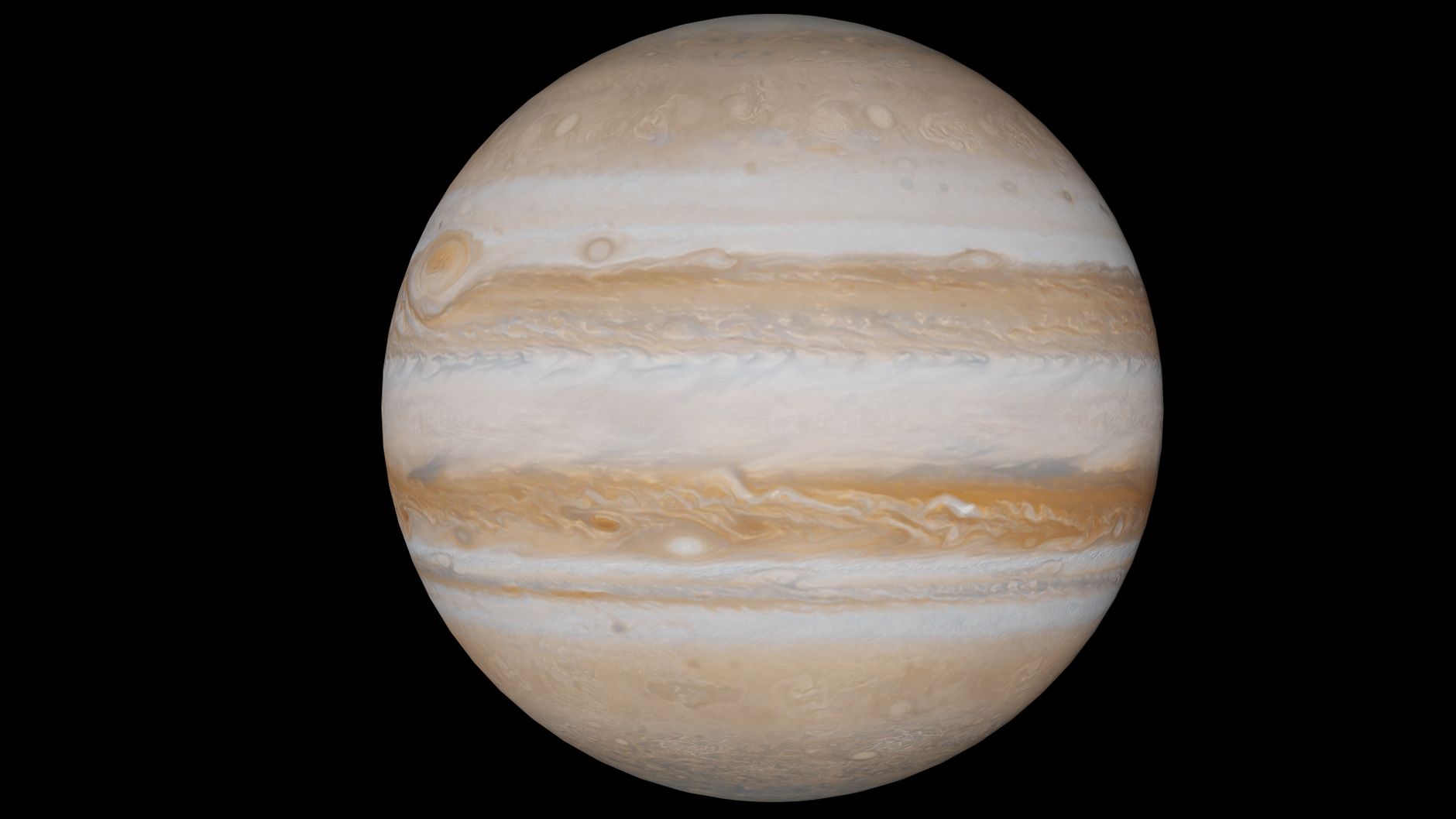
Jupiter-like weather is being observed 20 light-years away, showcasing surprisingly organized patterns that intrigue scientists. This discovery opens new avenues for understanding atmospheric dynamics beyond our solar system.
Understanding Jupiter-like weather
Recent observations of a distant exoplanet, located 20 light-years away, have unveiled intriguing patterns resembling Jupiter-like weather. Scientists have noted that the atmospheric conditions on this planet exhibit a surprising level of organization, akin to those found on our solar system’s largest gas giant.
The study, conducted by a team of astronomers, highlights several key characteristics of this organized weather system:
- Banding Patterns: Similar to Jupiter, the exoplanet displays distinct bands in its atmosphere, which are believed to be caused by strong winds and temperature variations.
- Storm Activity: The presence of large storms, reminiscent of Jupiter’s Great Red Spot, indicates dynamic weather systems that are both persistent and powerful.
- Cloud Composition: The analysis suggests a diverse range of cloud types, contributing to the colorful and complex atmospheric phenomena observed.
This discovery not only enhances our understanding of atmospheric dynamics on distant worlds but also raises questions about the formation and evolution of such weather patterns. The findings could have significant implications for studying other gas giants across the universe.
The significance of organized weather
The recent discovery of organized weather patterns on a distant exoplanet has significant implications for our understanding of planetary atmospheres. This phenomenon, reminiscent of Jupiter-like weather, challenges previous assumptions about the chaotic nature of weather in distant worlds.
Scientists believe that understanding these organized patterns can provide insights into the formation and evolution of planetary systems. Key points of significance include:
- Comparative Analysis: By studying Jupiter-like weather on this exoplanet, researchers can draw parallels to similar phenomena on our own gas giants, enhancing our understanding of atmospheric dynamics.
- Climate Models: The findings may lead to improved climate models that account for the complexities of weather systems on both exoplanets and Earth, ultimately refining our predictions.
- Habitability Studies: Understanding organized weather systems could inform the search for habitable conditions on other planets, guiding future exploration missions.
- Atmospheric Chemistry: The discovery may also shed light on the chemical processes occurring in these atmospheres, revealing more about the materials that compose them.
As scientists delve deeper into these findings, the implications for astronomy and planetary science continue to expand.
How scientists study distant atmospheres
Studying distant atmospheres, particularly those exhibiting Jupiter-like weather, involves a combination of advanced technology and creative scientific methods. Researchers utilize a variety of instruments to analyze the light emitted or absorbed by these distant worlds, allowing them to infer atmospheric composition and dynamics.
One of the primary tools scientists employ is the spectrograph, which breaks down light into its component wavelengths. This enables them to identify the presence of specific gases, such as methane or water vapor, that are critical for understanding atmospheric conditions. Additionally, telescopes equipped with adaptive optics can correct for atmospheric distortions, providing clearer images of distant planets.
Another innovative approach involves the use of transit photometry, where scientists observe the dimming of a star as a planet passes in front of it. This technique can reveal changes in brightness that suggest the presence of clouds or storms, offering clues about the weather patterns present.
Through these methods, researchers gain insights into how atmospheres evolve, revealing organized structures akin to Jupiter-like weather, even in distant exoplanets.
Future implications for space exploration
The discovery of organized, Jupiter-like weather on a distant exoplanet has profound implications for the future of space exploration. As scientists delve deeper into the atmospheric dynamics of these distant worlds, several key areas of interest emerge.
- Enhanced understanding of planetary atmospheres: By studying Jupiter-like weather patterns, researchers can gain insights into how atmospheres develop and evolve under various conditions, potentially informing our understanding of both gas giants and terrestrial planets.
- Search for habitable worlds: Identifying planets with organized weather systems may lead to the discovery of environments that are more conducive to life. This could shift the focus of exoplanet exploration towards atmospheres that exhibit stability similar to those found on our solar system’s gas giants.
- Technological advancements: As we develop more sophisticated tools for observing distant atmospheres, our ability to analyze the chemical compositions and weather patterns will improve, paving the way for more detailed studies of exoplanets.
Ultimately, the findings related to Jupiter-like weather not only expand our knowledge of the universe but also inspire innovative approaches to future space missions, fostering a new era of discovery.
Photo by Zelch Csaba on Pexels


2 thoughts on “Jupiter-like weather: Clear signs of organization discovered”